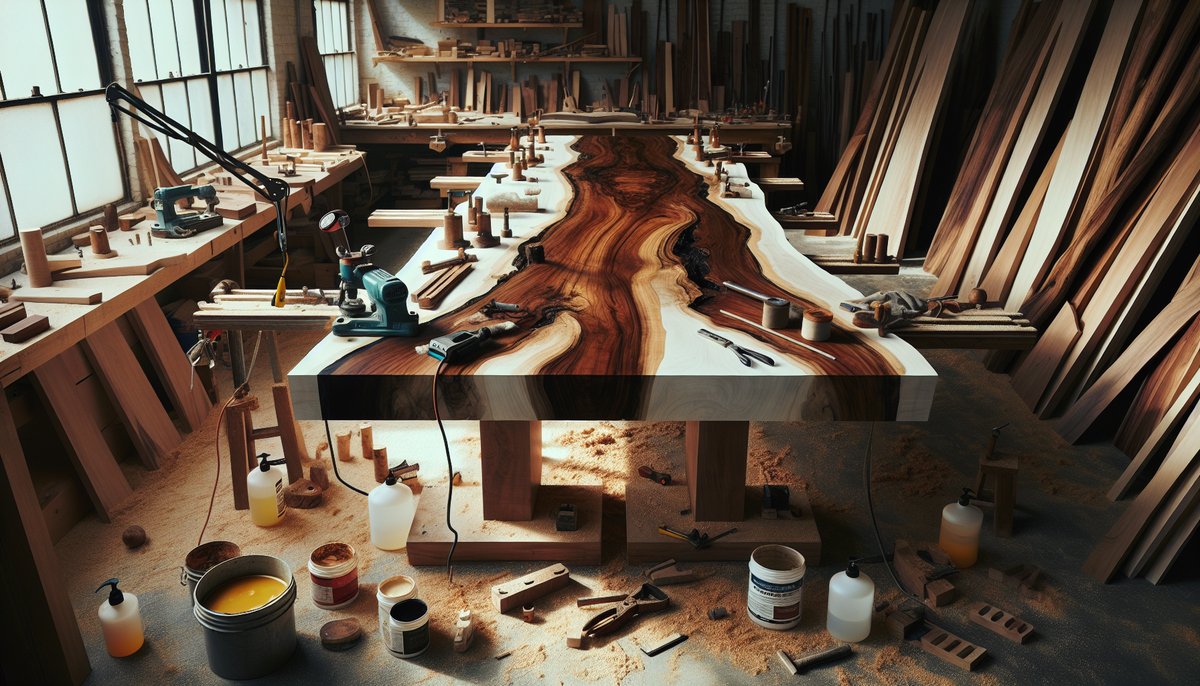
Building a Live Edge Dining Table: Direct, Practical Inspiration
Woodworking

Building a Live Edge Dining Table: Direct, Practical Inspiration

A live edge dining table deserves more than an assembly montage or generic before-and-after shots. The best clips do more than flash pretty slabs and resin: they show concrete problem-solving, reveal real workflow quirks, and lay bare the table’s journey from tree to centerpiece. If you want to actually build, not just admire, look for creators making technique choices explicit - where the story isn’t just visual, but instructive.

@Ksenia Avdulove TikTok
Why this clip

Ksenia Avdulove doesn’t rush the process. She starts at the sawmill, narrates every decision, and actually shows the resin color test instead of claiming 'we picked a hue.' The upside-down pour and methodical sanding show she’s working with real variables, not just following a Pinterest script. This is a candid, generous build diary - mess and triumph both.

@This Old House YouTube
Why this clip

This Old House goes granular on prep: bookmatching, careful bark removal, and slab flattening with a router sled all get proper airtime. Tom Silva’s insistence on surface prep and scale adaptation (console size, not just slab) is practical. It’s less about one perfect table, more about showing what good woodworking discipline means in context.

@Dwell YouTube
Why this clip

Dwell’s Walnut dining table feels within reach, not just because of camera polish, but the rigorous dissection of each step. Swapping to a fresh circular saw blade, cleaning knotholes by hand, and thoughtful use of painter’s tape to contain resin - all details that save pain for real first-timers. The confidence to trust one’s eye for rounding edges is a welcome nudge against following templates blindly.

@Live Edge Timber Co. YouTube
Why this clip

Live Edge Timber Co. drills in on the value of pocket hole joinery and gluing technique - not high art, but totally honest DIY. The choice to finger-apply wood filler and the direct wiping method for finish aren’t glamorous, but they’re real. If you want to see how non-specialists get from mismatched boards to a presentable surface, this is the pragmatic walkthrough.

@Connecticut House TikTok
Why this clip

Connecticut House leans into story over technique, but the specificity - copper beech, resin filling, copper butterfly joints - makes it more than another sentimental upcycle. The emotional logic for design choices is transparent, and even without tool close-ups, it illustrates why material provenance still matters for modern makers.

@Black Bear Table Company YouTube
Why this clip

Black Bear Table Company focuses on the razor’s edge of bookmatching slabs. No muddle about what can go wrong: bad cuts equal bad symmetry, and that’s all that will matter in the final piece. The disciplined setup and emphasis on track saw precision is manual skill, not just content filler.

@epoxywoodworking Instagram
Why this clip

epoxywoodworking’s molten pewter and walnut build is niche, but executed with technical clarity. The process for bonding non-stick metal to wood using epoxy, and deliberately skipping the usual high-gloss polish for a brushed finish, signals thoughtful experimentation. Less immediately practical, but rewarding to watch if you crave hybrid methods.

@Jackdcreations TikTok
Why this clip

Jackdcreations presents a clean, fast-motion sequence of every standard live edge step - slab prep, router sled flattening, void filling, and finish application. There’s little depth to any single phase, but as a visual checklist for what’s actually involved, it works. Skip to a deeper tutorial before grabbing a saw yourself.

@Rural Life YouTube
Why this clip

Rural Life delivers the eye-candy version: log segments encased in epoxy and sanded to a mirror. Nearly wordless and light on technique, it’s visually seductive but will leave a builder with more questions than answers. Fine for inspiration, not instruction.

@Jeff Mack Designs YouTube
Why this clip

Jeff Mack Designs condenses the $14,000 river table build into a few process hits: mold, resin, clamp, sand. As proof of possibility, it’s effective - but don’t expect any tuning-fork insights into why the process costs so much or how the visual joins are achieved. Skim, don’t study.

What separates the best

The best live edge table makers in this batch do the unglamorous work on camera, letting error and deliberation show. Clips that impress don’t just parade a time lapse; they document micro-decisions - the pigment mix, blade swaps, corrective sanding, why you might want a card scraper instead of a rag. A solid subset offer DIYers actionable workflow: selecting slabs with real flaws, honest finger-jointed glue-ups, stress-testing resin pours. The outliers veer abstract or emotional: the family tree memorial, or the high-gloss log set piece. Useful as material context, but thin as practical guides.

Technique-wise, there are two clear lanes. One leans heavily resin - sometimes river, sometimes patch - often paired with metal for drama or function. The other lives in surface prep and honest joinery: router sleds, pocket holes, glues, and the eternal dance of sanding and finishing. Both have their place, but the best videos slow down for the subtle part (color choice, cut alignment) rather than the big reveal.

Across the spectrum, clips that pair visual clarity with vocal annotation consistently outpace the mute aesthetic shorts. Overhead glamour shots can’t teach how to prep a knot or avoid a leaky pour. If you want a table you can eat off, not just dream about, watch for creators who leave their methods exposed - flaws, fixes, and all.

Test your next table in steps, not just plans. Watch the resin, question the finish, and trust the process over the sprint. Every new slab changes your learning curve - keep the camera rolling, and pay attention to your own workflow from there.