Embroidery in Focus: What Distinguishes Sharpened Technique from Forgettable Loops
CraftsTextile Arts

Embroidery in Focus: What Distinguishes Sharpened Technique from Forgettable Loops

True embroidery clips do more than repeat beginner tricks; they clarify, innovate, and respect the viewer’s capacity to learn actual technique. What matters is not just a pretty motif or a steady hand, but whether the video actually transmits the decision points of stitch, material, and movement in real time. Polished editing helps, but it’s the teaching embedded in the movements - never filler close-ups and commentary alone - that sets apart the few worth your retention.

@Whynotstitching YouTube
Why this clip

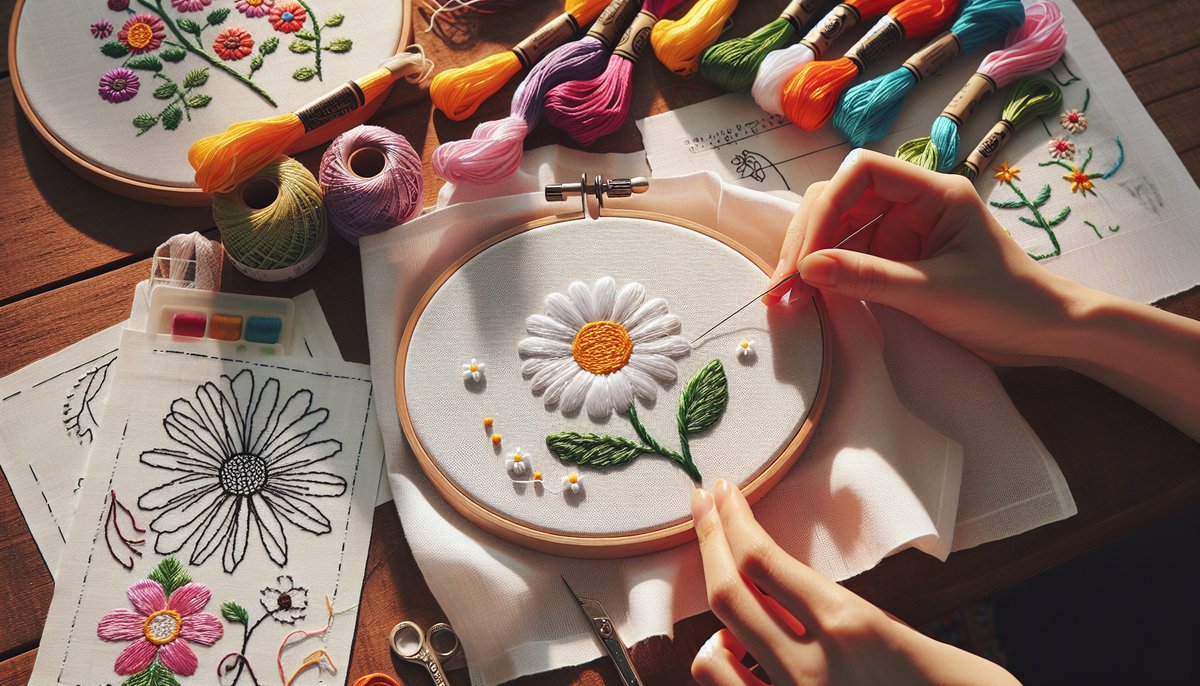
Whynotstitching's daisy tutorial is as tight as it looks: every motion builds the flower and nothing drags. The transition from detached chain to French knot for the daisy center is seamless, making the connection between form and stitch completely explicit. The inclusion of a twisted cord stitch to link the flowers is a level of thought almost every quick-flower clip misses.

@___gossamer__ Instagram
Why this clip

___gossamer__ achieves something rare in a one-clip lesson: several fundamentally different stitches on a single flower, each staged for clarity. The bullion-style wraps, straight center, and the clean stem/satin addition give viewers a structural map. This is more than decorative - it's a case study in how variations add density and control to your floral embroidery.

@cupofneedles YouTube
Why this clip

If you want to see what makes the back stitch a workhorse, Cupofneedles' close-up leaves no ambiguity. Every entry and exit point is shown, the thread tension is visible, and the rhythm never skips a beat for empty commentary. The only limitation is scope - it's strictly about line, not about context, and that focus is both its strength and its boundary.

@Embroidery by Gossamer YouTube
Why this clip

This camera-and-florals piece from Embroidery by Gossamer is a rare example of labeling that never interrupts the flow. The author doesn't just name stitches, but cross-references them with color numbers and thread count, letting learners map exactly what’s happening. It's maximalist instruction without chaos - rare and effective.

@Happy Jasu TikTok
Why this clip

Happy Jasu delivers the most convincing practical bulletin on 3D floral forms: bullion wraps for petals, French knots for texture, and no wasted steps. The hands do the talking; narration and overlays don’t dilute the visual instruction. The focus never blurs, which is more than I can say for most TikTok 'floral embroidery' content.

@Rup Handicraft YouTube
Why this clip

Rup Handicraft takes on the leaf - one of the least forgiving subjects - and manages detail and clarity across vein, fill, and outline. The satin stitch variation adds dimensionality, while the central vein never fades into the background. It’s not revolutionary, but it’s unusually precise.

@Embroidery By RP YouTube
Why this clip

Embroidery By RP brings feather stitch out of the dull pattern handbook and into a convincingly organic vine. Ribboning with lazy daisy petals and red buds, each section is methodical and actually beautiful - a result surprisingly rare in foundational stitch clips. Audio would help, but the steps are lossless in their clarity.

@a_n_a_embroidery TikTok
Why this clip

a_n_a_embroidery's butterfly wing edge tutorial proves the devil’s in the edgework: the split back and long-and-short combination gives the surface a sculptural finish. The narration walks through exact division, not vague encouragement. If you’ve ever wanted to elevate your outline work beyond cartoonish, watch closely.

@thethreadandcircle Instagram
Why this clip

thethreadandcircle's satin stitch flower tutorial is all about rhythm and tension: each petal is shaped for fullness, the French knot center anchors the motif without crowding. The visual tempo is clean. Not original, but you won’t find better for mastering this pairing.

@Crafts by Geesh YouTube
Why this clip

Crafts by Geesh isolates the bullion knot and uses it to build an actual recognizable motif - a disciplined rose - where most just spiral away into tangles. The controlled wrap technique is explicit, but the absence of broader context limits the replay value if you’re hunting for compositional advice.

@SR Embroidery YouTube
Why this clip

SR Embroidery factors blanket stitching and bullion knots into a five-petal flower that’s visually distinct. The woven wheel variant at the center adds bite, though the quick pace and lack of vocal explanation curbs how deep a learner can go without replay.

@Ankaila YouTube
Why this clip

Ankaila goes for dimensional effect with a needle weaving trick using a plastic stick - a clever hack for clean petals every time. The technique is accessible even for a first-timer and finishes with an anchor French knot, but this is a one-trick video, not a formula you can endlessly recombine.

What separates the best

The sharpest embroidery clips share one trait: they never waste your attention. Whynotstitching and _gossamer orchestrate multiple techniques side by side, each one earnestly revealed. There’s a throughline here: combining stitches (detached chain, bullion, feather, and satin) isn’t mere variety, it’s deliberate architecture. Where most social video aims for visual satisfaction, these creators invite you into decision-making - when to switch stitches, how to build form, and why tension or color choice matters at each step.

The mid-ranked selections deliver reliable clarity on foundation techniques - back stitch, satin stitch, split back stitch - often in isolation. These clips are efficient at showing mechanical basics, if not compositional vision. Further down, one-note demonstrations (bullion knot roses, blanket stitch flowers, needle weaving tricks) serve as good reference but lack the reusability of the more thoughtfully sequenced videos. The pattern is clear: instruction gains value not from simply repeating actions, but by connecting the dots between technique, aesthetic, and final visual effect.

Production values matter only where they clarify the stitch, not where they distract. Overlays, labeling, and thread counts are best when they enhance transparency, not fill air. The most useful creators respect that their audience wants to see - specifically - how decisions are made at the hands of an embroiderer who’s thought this through, and made strategic choices.

Pick one motif and attempt every stitch shown here for yourself - clarity comes through muscle memory, not just passive viewing. The more deliberate your combinations, the more your embroidery will escape the formulaic and become purposeful craft.