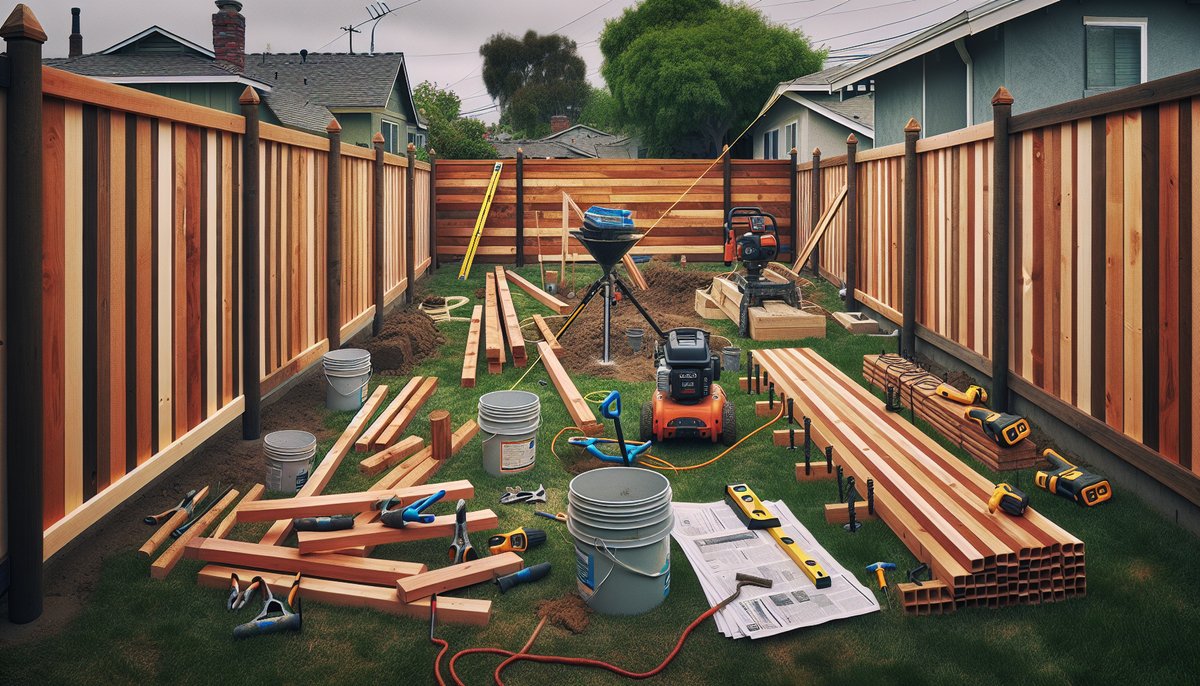
Bo doesn’t just tell you what to do; he shows every detail, from utility marking to solar post lights, including why tool rental saves hours and what’s actually braced and measured. The process is open and nothing is skipped for the sake of pacing. You learn where future you will cut corners - and why that’s a mistake.

Fence Building in Practice: What Actually Works
Fence building content spans the range from throwaway time lapses to detailed, actually actionable tutorials. The best clips show you the material choices, problem-solving in real time, and don’t gloss over missteps or local adaptations. Most viewers don’t need more sped-up generic builds - they need specificity and reasoning behind each step.
This is a rare horizontal fence build that gives actual budget numbers and documents the peculiarities: integrating brush piles, awkward tree lines, seam capping, and DIY gates. You get honest narration about what’s planned versus what had to yield to reality. More inventive than most influencer DIYs.
Joe Everest leans in on mistakes - utility lines, post depth, why on-site builds matter. It’s not a flashy build but an advisory breakdown drawn from generational experience, and you can sense when the pain points are non-negotiable. The real win is hearing his rationale for every design deviation.
Rare honesty about vinyl’s looks and performance in Florida. Demonstrates the state-specific dry set method for concrete and anti-sag bar, which almost nobody covers. Borrowing a neighbor’s tool gets a dry acknowledgment - a tiny reality often skipped in highly-edited clips.
A pro-level post setting tutorial. Shows both auger and manual options, but the value is in clear explanations on gravel for drainage, bracing logic, tamping, and why post alignment isn’t just visual but structural. Less about glossy reveals, more about surviving real-world winters.
Finally, a clip devoted to Shou Sugi Ban - charring posts for rot resistance. It’s a bit theatrical, but the preservation method is underrepresented in mainstream builds. Integrating this with self-closing gate hardware is practical, even if the voiceover oversells historic longevity. Still, the technique matters.
Silent build, but perfectly clear visual sequencing. Shows clamping, fabric installation, and slat alignment for horizontal privacy. Camera placement highlights stability and error-proofing, especially ladder work (so often ignored). If you’re actually planning to build this style, you’ll see what fussy steps can’t be skipped.
A genuinely thorough fence upgrade, from adhesive use to laser-aligned battens and even integrated LED strips. Spacers for consistent gapping get real attention. The visuals make you feel how tedious cladding alignment is, and the LED flourish is more substance than stunt.
A power tool clip that’s concise and worth it. Positive placement (Tico) nailers are niche, but this is one of the few places they’re openly demonstrated. No nonsense, no tool worship - just why speed and bracket alignment are superior to slow, error-prone screws.
Most WPC fence demos feel like ads - this one lands by directly showing fire and scratch tests, cleaning, and rapid install clips. If you’re actually considering composite systems, seeing the assembly and abuse tests side-by-side clarifies the tradeoffs immediately.
What separates the best
The best fence building clips are never just about materials - they show the rationale behind each step. Top performers make it explicit: calling 811 isn’t paperwork, it’s life-or-death; a level and string are habits, not gestures. Clips that stand out either slow down to explain decisions (tool rentals, drainage, vinyl’s strengths and weaknesses) or reveal the outcome of cutting corners. Horizontal slat and cedar cladding builds are strong for their attention to detail - requiring deliberate pacing, clamping, and tool choice - which most influencer montages glaze over.
Traditional methods, like burning posts or trenching for critters, get their due in a handful of videos, reminding viewers that longevity and local climate still trump gadgetry. Meanwhile, DIYers who bring in specialty tools like Tico nailers or demo WPC fence systems cut straight to the ‘why’ - speed, durability, or zero-rot performance - without lapsing into oversell. Gate construction and add-on lighting are rarely shown, but here they’re handled with the matter-of-fact practicality real builders need to see.
What unites the top clips is a willingness to narrate the why: why bracing matters, why alignment affects longevity, and why the ‘easiest’ technique often creates years of headaches. No gloss, no shortcuts through the grind. Just clarity on what actually makes a fence durable, straight, and satisfying to build.
Practice real alignment and don’t trust any shortcut you haven’t seen solved in detail. Strong fences aren’t built by rushing each segment - they’re built by understanding exactly where experience meets problem-solving.