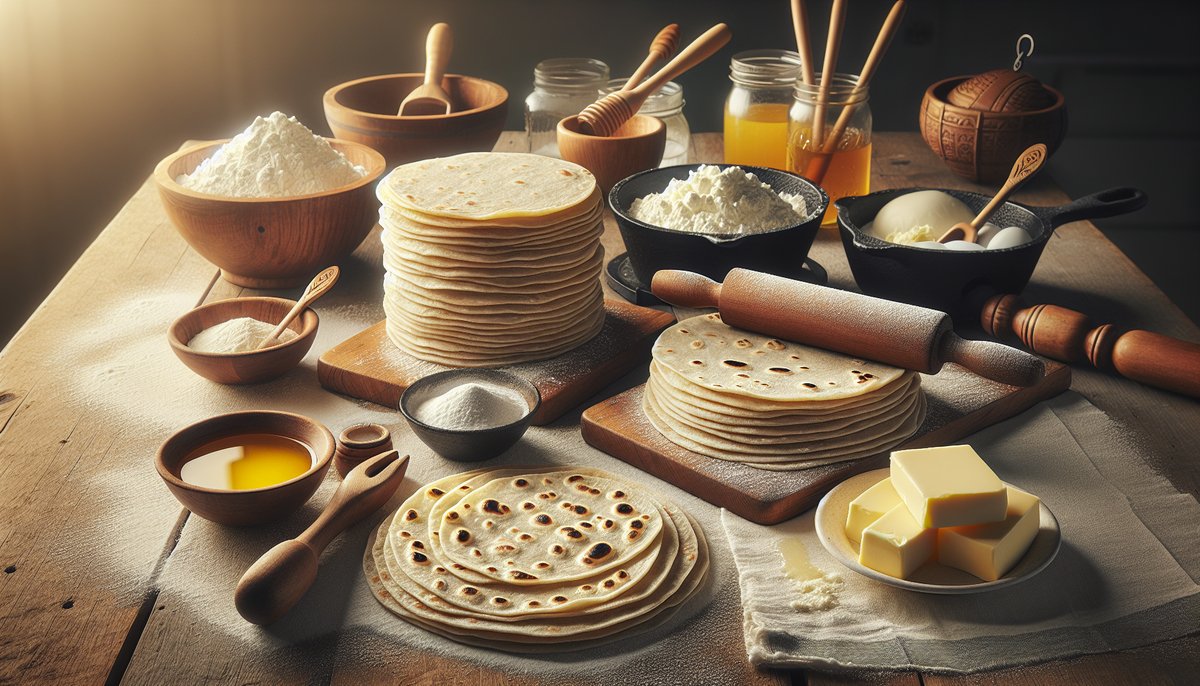
Homemade Tortillas: Real Clarity, No Filler
CookingMexican Cooking

Homemade Tortillas: Real Clarity, No Filler

Most tortilla clips drown in vague shots of hands, soft-focus flour clouds, and speed-ramped kneading. What actually matters: which technique yields chew versus fluff, whether you get insight into shaping, and whether you finish with a tortilla that snaps, folds, or dissolves. The best creators show their process in unbroken sequence, explain their ingredient choices, and - crucially - don’t treat every dough like it’s interchangeable.

@Patrick Zeinali TikTok
Why this clip

Patrick Zeinali swerves from every other flour tortilla tutorial by using only heavy cream as fat and liquid, making his process almost aggressively simple. That shortcut wouldn’t work with every flatbread, but here it produces a soft, nearly pastry-like tortilla that you’ll recognize instantly from the way it folds. There’s no unnecessary talking: just direct visuals, confident kneading, and nothing wasted.

@Maria Ximena YouTube
Why this clip

Maria Ximena does the rare double: she demonstrates both a tortilla press and hand-patting method for corn tortillas, then lands the key tip about Play-Doh consistency and tortilla inflation. Very few clips make hand-shaping look this attainable - her rotation technique is precise, and the abuelita reference isn’t a prop, it’s a functional detail for thickness control.

@Jose.elcook YouTube
Why this clip

Jose.elcook is obsessive about precision, going so far as to call out the exact wrong number of cups and insist on building a well for the flour - a classic working method many home cooks skip. The butter vs. bacon fat choice isn’t just a throwaway: he shows how the dough behaves differently, so you can see the effect on structure and taste. The use of a kneading whisk is a rare nod to practical home shortcuts.

@Epicurious YouTube
Why this clip

Saúl Montiel (Epicurious) delivers what every stepwise video hints at but rarely nails: visual and tactile cues for elasticity and readiness. You get both rolling pin and hand-shaping with commentary on outcome, plus the frame is open for mistakes - tough tortillas aren’t hidden off-camera. This is craft, taught without hand-holding, but never smug.

@alexandracooks Instagram
Why this clip

alexandracooks cuts to the actual selling point: no yeast, no waiting for rise, just direct flour–butter dough. The detailed sequence makes clear why those shortcuts work here. Including the full burrito assembly at the end isn’t just showy - it demonstrates structural integrity. Technique and form, both addressed.

@Claudia TikTok
Why this clip

Claudia zeroes in on the impact of hot water and hand technique, making sure you see the moment dough goes from sticky to smooth. There’s particular emphasis on dough 'feeling like wet sand,' which is more helpful than any prescribed mixing time. The shot of the puffing tortilla on the comal is earned, not staged.

@Maya Leinenbach TikTok
Why this clip

Maya Leinenbach brings focus to dough division for burritos vs. tacos and isn’t afraid to show lopsided rolling ("Let's pretend it's a circle"). That humility invites viewers to try - and her finished tortillas are flexible, with clean visual cues about thickness. The technique isn’t novel, but the clip doesn’t pretend otherwise.

@More Nick YouTube
Why this clip

More Nick delivers a blueprint-style guide with clear measurements, a highlighted lard swap for flavor, and an actual 30-minute rest, not just a jump cut to results. Every shot is direct: flour on the board, no fancy hands, just functional technique. He lands the 'smack you in the face with flavor' line with restraint - the finished tortilla justifies it.

@halfbakedharvest Instagram
Why this clip

halfbakedharvest isn’t reinventing the process, but the focus on olive oil pan-frying does change the tortilla’s texture and finish. The honesty about this being non-traditional matters. The process moves efficiently: dough comes together, rests, fries up, stacks. No padding, no time-wasting montage.

@Chef Jack Ovens YouTube
Why this clip

Chef Jack Ovens stands out for actually weighing portions and showing dough pressing before rolling. Storage advice - how to refrigerate or freeze for batching - gets often ignored, but it’s a real differentiator for anyone cooking in volume. His instructions land hard because every step is accounted for visually and verbally.

What separates the best

The throughline in these top clips is a decisive, method-driven approach. Butter, lard, heavy cream - each fat choice leads to a different finished texture, and the clips that explore this (Jose.elcook, Salty Cocina, Patrick Zeinali) let you see and hear why it matters. Contrast that with creators who stick to the usual flour-water routine: they deliver results, but never with quite the same authority or insight.

Hand-shaping versus pressing reveals a surprisingly sharp fork for corn tortillas: Maria Ximena makes a case not merely for tradition but for tactile control - something the press-only crowd mostly skips. Resting times, resting methods, and surface choices (griddle, skillet, comal) get explicit treatment in the best clips, removing any lingering guesswork. A minority, like Chef Jack Ovens, actually show batch production, shaping, and storage in a way that respects viewers who cook for households, not just for a TikTok loop.

Of the rest, production value matters far less than practical cues: signs of readiness, the critical moment of dough inflation, the physical shape left after rolling. Clips that ignore these - settling for montages or hand shots with no context - quickly fall into background noise. Highly produced, highly edited segments are only useful when they refuse to skip the mess and hand-feel that define real tortilla-making.

If you’re serious about mastering tortillas, practice dough consistency and shaping - don’t just follow the recipe. Get your hands trained, and you’ll know by feel when you’ve hit the mark. The leap from store-bought to homemade isn’t about flavor alone: it’s about intuition and control.