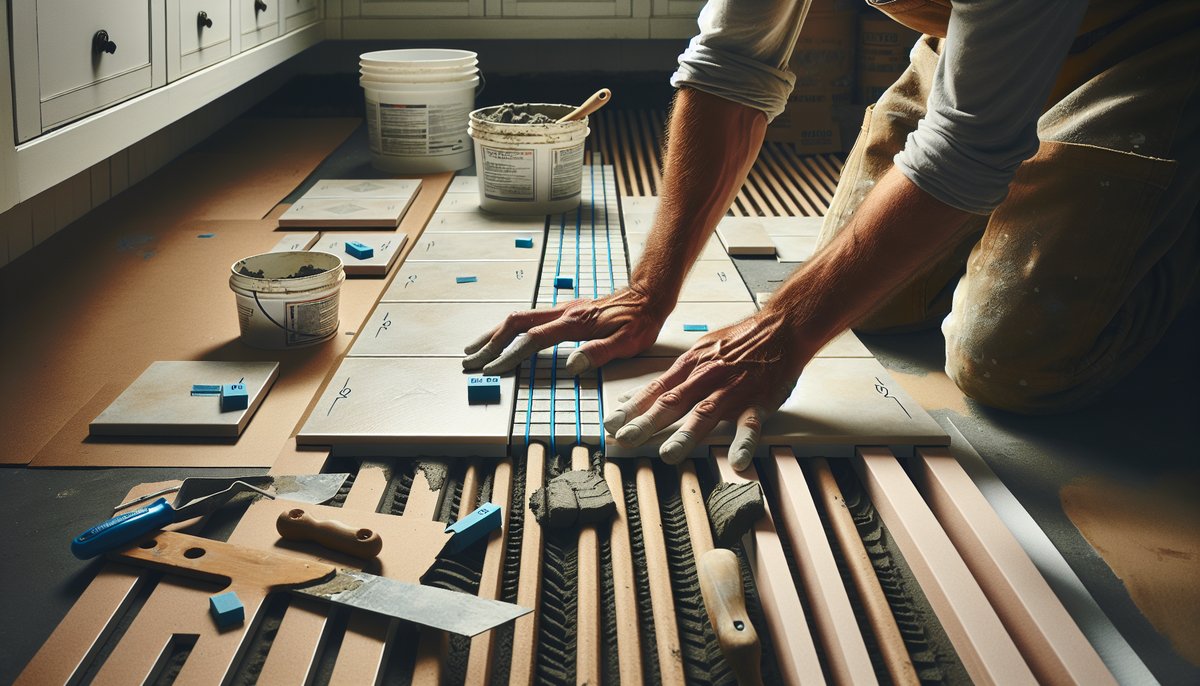
This is what careful tile work looks like before a single tile goes down. The Home Depot devotes real time to layout lines, mixing batches, and those tiny arrows most people ignore, and it pays off in cleaner results and zero 'why is this row crooked' moments. If your installer isn't walking you through this exact routine, they're winging it.

Tile Installation Unfiltered: Precision, Pitfalls, and What Actually Works
Tile installation videos are everywhere, but most are background noise, skipping the hard parts or glossing over crucial details. A genuinely worthwhile clip will zoom in on decisions that make or break the final result: layout planning, consistency of color, specific hand techniques, and those subtle fixes for imperfect walls and floors. The best content doesn’t waste your time - it shows both the problems and the real fixes.
If you're tiling over concrete or terrazzo, too many videos go generic. Here, the focus stays firmly on substrate, correct mortar use, and stair-step layout, with actual on-the-floor demonstrations. Showing the tool set, especially the leveling clips, gives you a step-by-step that doesn't dumb it down but still paints an honest picture of the process.
Lowe's steps through the full journey of wood-look tile install, not just the fun parts. Details matter: subfloor thickness checks, uncoupling membrane, and even trimming door jams. The coverage is exhaustive, bordering on overkill, but at least you see appliance reintegration handled with more realism than the usual time-lapse. If you want fewer surprises underfoot a year from now, this sequence is worth your time.
Zero talking, but plenty to learn: watching vertical finger mosaic tile go onto both flat and curved walls is quietly mesmerizing. The application is calm and methodical, with the rubber float technique more clearly demonstrated than in most explainers. If you ever wondered how pros get those tricky seams tight on a curve, watch this closely.
The standout detail here is handling electrical outlets without drama. Not only do you see marking and cutting, but the clip takes care to show vertical subway tiles being set with proper spacers and trim profiles. This attention to fit and finish pulls it ahead of most backsplash tutorials.
Ledger board technique: brutally simple, totally essential for the uneven-floor crowd. The logic is laid out in a sentence, the fix is visible in seconds, and you can immediately see why skipping this is a rookie move. Could do without the 'guys' intro, but the value is right there in the board.
No frills, no excess: this is tile install stripped to the basics and done without excuses. There's a discipline to showing both the adhesive on the floor and the back-buttering, finishing with a leveling system - so few short clips do this right. The entire lifecycle, grouting included, gets its moment.
Large format tiles demand a different approach, and this one shows the subtlety: tile vibrator, laser level for alignment, careful handling around plumbing, all in a small bathroom. The integration around niches is refreshingly clear. Some moments are under-explained (language barrier?), but the visual techniques are worth pausing on.
What separates the best
The difference between a competent tile install and one that falls flat starts well before the first tile is set. The highest-ranked clips here focus on pre-install: layout lines, substrate inspection, actual color-matching from different boxes. Creators that sweat these basics consistently avoid costly errors and produce the kind of work you don’t have to rip up a year later. Tools get their due here, too. Whether it’s tile leveling clips, a rubber float on a mosaic, or - refreshing to see - the right digital randomizer for 3D renders, you quickly spot creators who understand equipment as more than fashion accessories.
What’s striking is how many common pain points - uneven subfloors, grouting messes, appliance clearances - are only well-covered in the top couple of clips. As the list moves down, technique narrows but the demos sometimes get sharper: mosaic on a curve, precise cuts around outlets, using vibrators or laser alignment on large tiles. If you only watch short one-take clips, the real complexity hides in what they don’t show or explain. The best ones make those hidden steps visible, either with crisp camera work or just slowing down for a key adjustment. You’ll spot the difference instantly in the finished surface.
Real improvement comes from caring about the invisible steps: layout, alignment checks, systematic cleanup. Practise the slow, visible parts - the rest follows. The skill doesn’t just stop at your kitchen floor: it’s what sets your work apart, sometimes literally by the millimeter.